Pages

Showing posts with label TASS. Show all posts

Thursday, October 4, 2018

THE FIRST ARTIFICIAL SATELLITE HAS BEEN BUILT


SPUTNIK PUTS USSR FIRST IN SPACE

Moscow, USSR (JFK+50) On October 4, 1957, the Soviet Union announced the successful launch of Sputnik I, the first man-made satellite to orbit the Earth.  

Sputnik traveled at a speed of 18,000 miles per hour with each orbit taking 96.2 minutes to complete.The designers, engineers and technicians of the satellite waited until 90 minutes after lift-off to inform Premier Nikita Khrushchev because they wanted to be certain of the success of the mission.

Soviet news agency TASS reported...

"As a result of great, intense work of scientific institutes and design bureaus, the first artificial satellite has been built."

Sputnik I was 23 inches in diameter and made of polished metal.  The satellite had four external radio antennas which sent out pulses until the batteries lost power after 22 days in space.

President Dwight D. Eisenhower was not surprised by the announcement of the launch of Sputnik but was surprised by the reaction of shock by the American people that the Soviets were so far ahead of us in the space race.  Senator John F. Kennedy would say in his 1960 campaign that the United States should "be first in space....period!"

Sputnik completed 1,440 orbits before its service ended on Jan. 4, 1958.


Replica of Sputnik I
US National Air & Space Museum
Washington, D.C.
NSSDC, NASA Photo (2004)

Wednesday, October 4, 2017

THE SPACE RACE WAS ON

JFK+50:  Volume 7, No. 2461

SOVIETS LAUNCHED SPUTNIK 60 YEARS AGO 

Moscow, USSR (JFK+50) Sixty years ago today, October 4, 1957, the Soviet Union successfully launched the first man-made satellite to orbit the Earth, Sputnik I.  

The satellite traveled at a speed of 18,000 miles per hour with each orbit taking 96.2 minutes to complete.  Soviet designers, engineers and technicians waited until 90 minutes after lift-off to inform Premier Nikita Khrushchev because they wanted to be certain of the mission's success.

Soviet news agency TASS reported...

"As a result of great, intense work of scientific institutes and design bureaus, the first artificial satellite has been built."

Sputnik I was 23 inches in diameter and made of polished metal.  The satellite had four external radio antennas which sent out pulses until the batteries lost power after 22 days in space.

Sputnik completed 1,440 orbits before its service ended on Jan. 4, 1958.

Seth Shostak reminds us that this satellite, about the size of a fitness ball, absolutely stunned most Americans.   "It greatly increased spending on science education," and within a year NASA was established.  The space race was on.

SOURCE

"Sputnik Shook the Nation 60 Years Ago.  That Could Happen Again", by Seth Shostak, October 4, 2017, MACH, www.nbcnews.com/


Replica of Sputnik I
US National Air & Space Museum
Washington, D.C.
NSSDC, NASA Photo (2004)


Tuesday, October 4, 2016

FIRST ARTIFICIAL SATELLITE

JFK+50:  Volume 5, No. 2088

SPUTNIK LAUNCHED BY SOVIETS 59 YEARS AGO 

Moscow, USSR (JFK+50) Fifty-nine years ago today, October 4, 1957, the Soviet Union announced the successful launch of Sputnik I, the first man-made satellite to orbit the Earth.  

Sputnik traveled at a speed of 18,000 miles per hour with each orbit taking 96.2 minutes to complete.The designers, engineers and technicians of the satellite waited until 90 minutes after lift-off to inform Soviet Premier Nikita Khrushchev because they wanted to be certain of the success of the mission.

Soviet news agency TASS reported...

"As a result of great, intense work of scientific institutes and design bureaus, the 1st artificial satellite has been built."

Sputnik I was 23 inches in diameter and made of polished metal.  The satellite had four external radio antennas which sent out pulses until the batteries lost power after 22 days in space.

President Dwight D. Eisenhower was not surprised by the announcement of the launch of Sputnik but was surprised by the reaction of shock by the American people that the Soviets were so far ahead of us in the space race.

Sputnik completed 1,440 orbits before its service ended on Jan. 4, 1958.


Replica of Sputnik I
US National Air & Space Museum
Washington, D.C.
NSSDC, NASA Photo (2004)


Saturday, October 4, 2014

SPUTNIK I

SOVIETS LAUNCH FIRST MAN MADE SATELLITE

Moscow, USSR (JFK+50) Fifty-seven years ago today, October 4, 1957, the Soviet Union announced the successful launch of Sputnik I, the first man-made satellite to orbit the Earth.  

Sputnik traveled at a speed of 18,000 miles per hour with each orbit taking 96.2 minutes to complete.


"Dawn of the Space Age"
by Gregory R. Todd
October 4, 2007

The designers, engineers and technicians of the satellite informed Soviet Premier Nikita Khrushchev 90 minutes after lift-off because they wanted to be certain of the success of the mission.

Soviet news agency TASS reported:

"As a result of great, intense work of scientific institutes and design bureaus, the 1st artificial satellite has been built."

Sputnik I was 23 inches in diameter and made of polished metal.  The satellite had four external radio antennas which sent out pulses until the batteries lost power after 22 days in space.


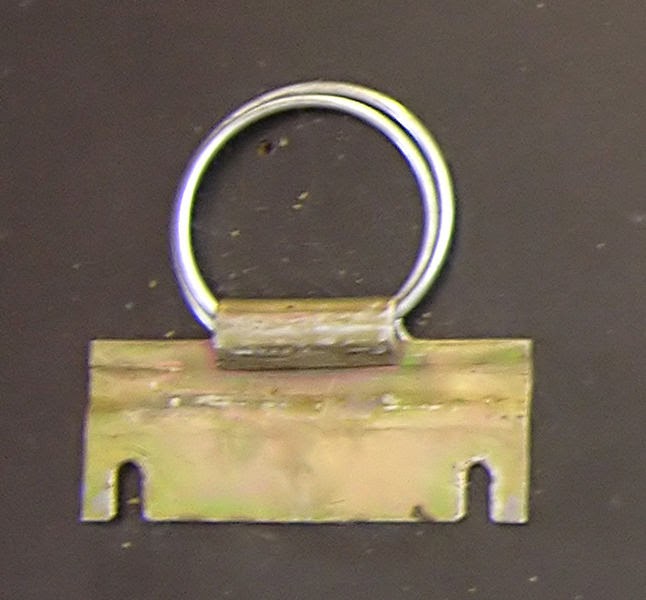
Sputnik I Arming Key
Only Remaining Piece
National Air and Space Museum
Alkivar at wikipedia project

President Dwight D. Eisenhower was not surprised by the announcement of the launch of Sputnik but was surprised by the reaction of shock by the American people that the Soviets were so far ahead of us in the space race.

In the 1960 presidential election campaign, Democratic nominee John F. Kennedy would argue that the United States should move ahead of the Soviets in the space race.

Sputnik completed 1,440 orbits before its service ended on Jan. 4, 1958.